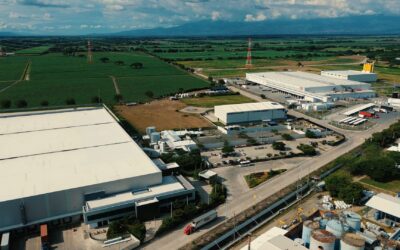
The Strategic Initiative of Valle del Cauca
In recent years, Colombia has undergone a significant transformation in its economic and logistical development, and one of the key drivers of this growth has been the consolidation of the industrial parks. These spaces not only bring businesses together and facilitate their operations, but also drive regional development, job creation, and the country's competitiveness
In this context, the Valle del Cauca has become one of the leading regions in industrial infrastructure, thanks to its strategic location, multimodal connectivity, and the presence of business hubs in Cali And Palmira.
What are industrial parks, and why are they so important?
An industrial park is much more than just a collection of warehouses or factories. It is planned business ecosystems, designed to house companies from various sectors—including manufacturing, logistics, technology, and agribusiness—with the aim of optimize resources, improve the operational efficiency and promote business collaboration.
Among its main benefits are:
- Appropriate infrastructure: Guaranteed public services, wide roads, 24/7 security, and areas for expansion.
- Logistical advantages: proximity to ports, airports, and major highways.
- Attracting foreign investment: Many international companies prefer to set up operations in industrial parks because of their formal and organized environment.
- Sustainability and urban planning: help relieve congestion in cities and concentrate economic activity in areas designated for that purpose.
In Colombia, the boom in industrial parks has been evident in strategic regions such as the Caribbean, Antioquia, and, especially, the southwestern Colombia, where Valle del Cauca stands out as a logistics and manufacturing hub.

The Valle del Cauca: the industrial heart of the southwestern region
The Valle del Cauca is one of Colombia's most dynamic regions in terms of industry and exports. It has a prime location: it is directly connected to the Port of Buenaventura, the country's main port on the Pacific Ocean, making it the natural gateway to markets in Asia, Oceania, and the West Coast of the Americas.
In addition, the Valley has a world-class road and airport infrastructure, led by the Alfonso Bonilla Aragón International Airport, located between Cali and Palmira, which facilitates both the transport of cargo and the movement of corporate personnel.
Cali and Palmira: The Industrial Hubs of the Future
In the heart of the Valley, the cities of Cali and Palmira account for a large part of the region's industrial development.
Palmira, in particular, has established itself as a a strategic location for the development of industrial parks and free trade zones, thanks to its proximity to the airport and quick access to Buenaventura. Notable examples include the Pacific Industrial Park and Free Trade Zone, Palmaseca Industrial Park And Cauca Free Trade Zone, espacios que albergan a empresas de sectores como el alimentario, el logístico, el químico, el farmacéutico y el tecnológico.
For its part, Cali, as the regional capital, offers an environment of business, financial, and technology services, in addition to a highly skilled workforce thanks to its universities and technical institutions. This synergy between infrastructure and human talent makes the region an ideal ecosystem for investment and innovation.
Competitiveness, Sustainability, and the Future
The industrial parks in Valle del Cauca not only represent efficiency and productivity, but also a commitment to sustainability and orderly development. More and more projects are incorporating renewable energy systems, water treatment, and corporate social responsibility programs that benefit nearby communities.
In addition, with the growing demand for logistics space due to the boom in e-commerce and the relocation of businesses (nearshoring), Valle del Cauca has a unique opportunity to establish itself as the most important logistics hub on the Colombian Pacific coast.

In conclusion
Industrial parks are cornerstones of Colombia's economic development, and particularly of the Valle del Cauca region.
Their impact goes far beyond infrastructure: they create jobs, drive innovation, attract foreign investment, and contribute to the sustainable growth of cities.
Cali and Palmira are emerging as the main drivers of this progress, combining connectivity, human talent, and strategic vision to position the Valley as the industrial heart of southwestern Colombia.